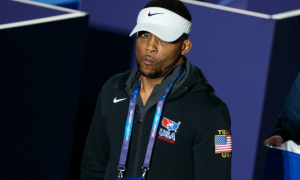
We use various phrases to describe, if not downright trumpet, the length of time that United States Greco-Roman athletes must use to prepare for World Championship tournaments. We say things like “training block”, or “training cycle”, sometimes replacing either “block” or “cycle” with the word “phase”. All are apt. All make sense. But they are also incomplete because, especially with how the unit is run these days, the Americans are practically beholden to an entire season of training when it comes to World-level events. This is primarily why US National Team head coach Herb House has wanted the World Team Trials to be held in April. More time to train.

And so this season of training for the 2026 World Championships had fully begun last month following the Pan-Ams. The first leg saw the roster split in half. World Teamers from 55 kg (Max Nowry) to 72 (Benji Peak) spent over two-plus weeks in Croatia, as the middle to upper-weight guys touched down in Budapest where they grinded it out along with the rather deep and formidable Hungarian squad. These separate overseas camps were not insignificant, though both served as mere primers for what the USA roster is encountering over the next two weeks at home in Colorado Springs, Colorado.

This past Monday, the latest World Team camp kicked-off at the Olympic (and Paralympic Training Center) with three top international teams coalescing with the Americans: Hungary, Japan, and Ukraine. For those who indeed keep up-to-date with the US Team, Georgia was originally slated to return to Springs this year until the Eastern European nation went in a different direction. That is what paved the way for Japan to join the fray, which is a rarified occurrence. Japan — which boasts several dynamic lightweights and multiple World/Olympic champs — has not trained as a collective on US soil in many years, therefore providing all involved with an opportunity to share mat space with one of the most kinetic and well-balanced teams in the sport.
Along with Hungary, Japan, and Ukraine are other international athletes of immense repute training this week with Team USA. Below is a list of these wrestlers categorized by country and alphabetically:
Denmark (DEN)
Turpal Bisultanov (87 kg)
2022 World Champion
2024 Olympic bronze
Hungary (HUN)
Robert Fritsch (77 kg)
2023 World silver
2025 World bronze
Levente Levai (72 kg)
2025 U23 World bronze
David Losonczi (87 kg)
2023 World Champion
2022 World bronze
Erik Szilvassy (82 kg)
2017 U23 World Champion
2024 World silver
Alex Szoeke (97-130 kg)
2022 U23 World Champion
2021 World silver
Istvan Takacs (87 kg)
2022 U23 World Champion
Dariusz Vitek (130 kg)
2025 World silver
Japan (JPN)
Nao Kusaka (77 kg)
2024 Olympic Champion
2025 World silver
2023 World bronze
Kyotaro Sogabe (67 kg)
2022 U23 World bronze
Taizo Yoshida (82 kg)
2025 World bronze
Ukraine (UKR)
Ivan Chmyr (87 kg)
2025 U23 World bronze
Yaroslav Filchakov (87 kg)
2023 World bronze
2022 World bronze
Irfan Mirzoiev (77 kg)
2025 U23 World Champion
Parviz Nasibov (77 kg)
2020 Olympic silver
2024 Olympic silver
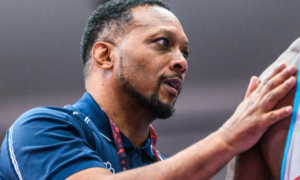
With this big-time camp in Springs now underway, House first discusses the aforementioned pair of overseas gatherings that took place in May before turning his attention to what lies in store this week (and next) for his athletes at the Olympic Training Center.
USNT Coach Herb House
World Team Training 2026 Part I
5PM: The middle to upper-weight athletes trained in Hungary while the lighter-weight guys went to Croatia. You were with the group in Hungary, and it was not a short trip. What did you think of it?
Coach Herb House: It was kind of a different trip. There was a different approach with a lot of strength training, running, and a couple of days of wrestling. It was more about creating a base for the wrestlers. We were running six miles a day, bodyweight lifting our partners, and each morning they swam ten laps. Then they got back into the weight room. There was a lot of strength training and there was a lot of live wrestling. This was Hungary’s base training camp and it was great for us. It was great for us to learn different ways to prepare midseason and then take those lessons back home with us. Hungary is a country that has had around 180 medals throughout their history. I wanted to show the guys what it takes for them to become World and Olympic champs.
5PM: You said something interesting. You used the word “midseason”. Usually in our program there is a base conditioning phase in the winter and then perhaps again to prepare for the World Championships training phase. Now, Hungary is known for the challenge that their camps present. How did our own athletes hold up to that type of intensity?
HH: They did really well after the second day. I think that they learned to adapt to it, just as you need to adapt to your opponents. The first day that we went to the room, we were struggling. We had jumped off of a ten-hour flight, ran six miles, and we were sore. But on the second day we started holding our own. We were looking great. We were adapting and so we were also looking better. As far as us being in-shape? I’m not worried. We’re always in shape. We just need to learn how to adapt to certain situations at certain times, and we wound up doing well with that. This is why I think that we need a lot more joint international training. It gives our athletes good looks and I was impressed with how our guys were functioning towards the end of the camp. They were picking it up and pushing the Hungarians a lot more than maybe they even expected.
5PM: What other programs were there besides us and Hungary?
HH: It was just us and Hungary. It was their camp and we were part of it. That was one of the main benefits for us going, spending time on each other. Plus, Hungary has a World medalist in, I think, every weight class from 72 kilos on up.
5PM: You had one World Team member, Joel Adams, who could not go to Hungary because he had to finish classes for his semester. In that kind of situation, are you coordinating with his coaches from Oregon State to make sure that he is ready for this camp in Springs?
Coach Herb House: I mean, that was the message that I gave everyone, that they had to come into this camp at home in-shape. We are hosting Japan, Hungary, and Ukraine, so you have to be prepared.
5PM: Right, plus someone like Adams has the opportunity to train with Nao Kusaka.
HH: Right, and Kusaka goes one speed, too. So we have to be prepared when entering a camp like this. Plus, we’re at home. And one of my directives is that we have to use this camp as a catalyst to ramp things up to a new level. I’m excited about this camp.
5PM: What reports did you get from the lightweight group that was in Croatia?
HH: They were in really good spirits, actually. It wasn’t too hard for them, though they did have some good matches. I think that Ukraine had come in during the last part of camp and they had some good matches with those guys. I think that pleased our guys because it showed them a different look. But — it’s good to not always have a camp that just pounds on you. It is nice to have a camp where you can beat up on some guys who should beat up on. And this is no disrespect at all to those teams and athletes, but there are partners who you should be beating up on. You should be winning. It helps build confidence to have those kind of camps, too.
5PM: Originally, Georgia was to be part of the camp in Springs but instead it is Japan as one of the three international teams. Japan is pretty balanced, but they veer more towards having excellent lightweights. Do you think that this adds a more versatile flavor to the camp than if it were Georgia in that spot?
HH: Having Japan in the camp is unique because we never get to see them. It has been a while since Japan has been to any camp I’ve seen, including ones overseas. So, it is a big benefit not just to us, but also to the other two teams we are hosting during this camp. Japan had two Olympic champs in ’24 and two World medalists last year. I love this opportunity to train with them. They are doing something right — and I want to see what they’re doing.
5PM: How did it come about insofar as getting them just given the short turnaround with Georgia not being able to do it?
Coach Herb House: It has been a journey. I had been begging them for the past few years. Then I saw their coach at a tournament last year and was like, Come on, Coach, let’s do this. I told them that I would take care of everything, room and board — everything. All they needed to do was get a flight to Colorado Springs. Then I called them once Georgia decided that they were not going to make it, and Japan said, Okay, we’ll come. I was very excited. Plus, I think they saw us at the U23 World Championships and were impressed with how we looked in that tournament.


SUBSCRIBE TO THE FIVE POINT MOVE PODCAST
iTunes | Stitcher | Spreaker | Google Play Music