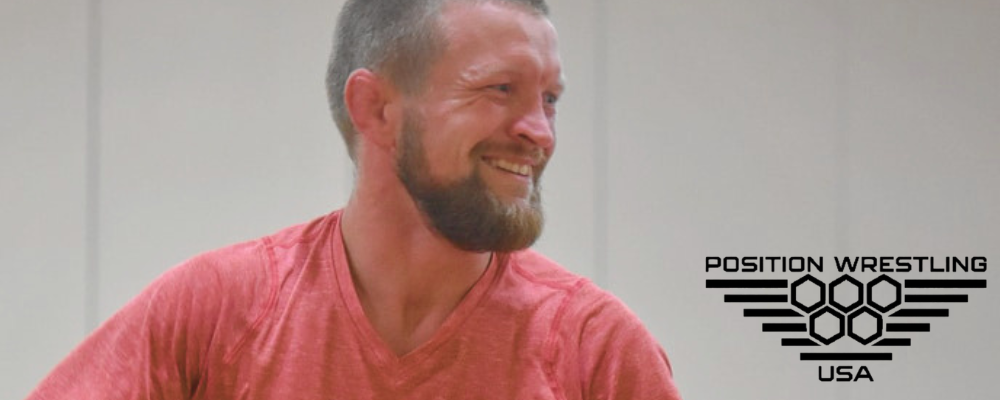
Since the late fall, there have been occasional references to Sam Hazewinkel’s new venture known as Position Wrestling. The first was when Jace Koelzer (60 kg) earned gold at the Haparanda Cup in December (in what was Koelzer’s first international appearance), and then again in early-2026 when “Mr. Fantastic” Benji Peak (72 kg, NYAC) was a guest on the Five Point Move Podcast. But, at least until recently, much of the information surrounding Position was protected. Hazewinkel — affectionately dubbed “The Legacy” due to his Olympian bloodline — did not want any perceived carts thrown in front of any proverbial horses. It was all understandable.

Greco-Roman in the US has more-than-sporadically seen, and heard from, various figures who claimed to be starting teams or training centers. An endeavor that is the furthest thing from easy to accomplish winds up an exciting conversation piece with myriad promises made, none kept, and, before long, the whole scenario is forgotten about as if it had never happened. Because, after all, it hadn’t. And also because such a project is absurdly-difficult to engineer between securing funding, adequate space, the right kind of athletes, and, of course, the right coaches involved to initiate launch. Too many moving parts, not enough financing, and a lack of coaching credibility are often the biggest culprits in why these upstart training centers cease to advance beyond the realm of hypothesis.
Hazewinkel already had his ducks in a row prior to ever opening his mouth even once but, still, he desired maintaining a little distance between what people knew and what was really going on. Why? In part due to Position coming off as almost too good to be true. Hazewinkel’s wrestlers are generously-funded and have a dedicated training venue. They also have Hazewinkel as their coach, a man who not long ago was one of the most versatile and successful competitors of his era. American Greco-Roman has never had something quite like it. Yes, Army’s World Class Athletes Program, considered the best landing spot in the country, means that wrestlers are compensated commensurate with their respective military pay grades while also benefiting from an astounding amount of other peripheral resources. But that is, essentially, a government-sponsored deal. Position Wrestling is completely and totally independent, beholden to no one else outside of its board of directors.

So, Hazewinkel wanted to guard against a cavalcade of athletes and coaches reaching out to him. He wasn’t going to make promises he couldn’t keep, nor did he wish to receive countless inquiries from interested wrestlers. Hazewinkel himself still thinks like one of them, and he is also the soft-hearted type. Therefore, he did not relish being put in a spot to have to tell guys “no”. He also did not want Position to occupy prime real estate in the Greco rumor mill, though that element of it was out of his control, anyway.
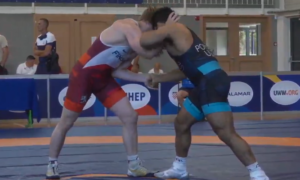
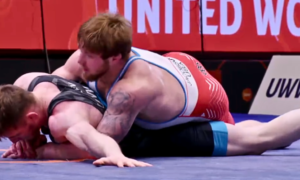
Now it no longer matters. In just over a week and some change, the ’26 World Team Trials will commence in Las Vegas with all five Position athletes competing: two-time World Team member Brady Koontz (55 kg, TMWC), Koelzer, U23 National Champion Rhett Peak (63 kg), Benji Peak, and ’23 U20 National champ Brett Back (72 kg). The “starting five”, as it were. Koontz is an obvious top contender at 55 kilograms and will garner the #1 seed while Benji Peak is likely to be slotted in at #2 in his weight category behind Alex Sancho (Army/WCAP). It is a sound and reliable nucleus of wrestlers with whom Hazewinkel works on a daily basis and he is hoping, if not expecting, all five to threaten for World or National Team honors in their respective weight classes. However, this is all only the beginning. Regardless of the team’s combined outcome in Vegas, Position Wrestling is poised to fill a much-needed gap in the Greco-sphere as an additional pipeline designed to develop medal-capable competitors. They have the right leader in place as well as plenty of room to grow. That, too, is the expectation once this year’s World Team selection process has concluded.
Sam Hazewinkel — Head Coach, Position Wrestling
5PM: When did the concept of a club, or team, really start to gain momentum for you?
Sam Hazewinkel: Probably a year ago. Let’s just call it the beginning of ’25. We started talking about it. I mean, for every Greco guy it’s the dream. One day I was talking to my buddy and he asked me, “What do you need? What would you have liked when you were wrestling?” So I said, Well, it would been nice to get paid, and he goes, “obviously”. But still, I said, It would have been nice to get paid, to not have to scrounge by. And it would have been nice to not have to do folkstyle. All RTC’s (regional training centers) are connected to a college. We do have a couple in Greco. We have Army, we have the OTC (Olympic and Paralympic Training Center), and Northern Michigan. But at the same time, it would be nice to have another option. I wanted the RTC model — but not connected to a college. I did not want to have to worry about Greco guys doing stand-ups with college guys. I want them to be able to just do Greco every practice, all the time. I wanted them to be training together. I did not want it to be a club where guys are scattered across the US until they come together for a camp. We wanted a club where everyone is here training together. More like a college team. And he was like, “Done. Let’s make it happen. We’ll get a board put together and make it happen.”
So I thought, Oh, that’s cool. But I did not know how real to take any of it. Then slowly over the past year we started putting the pieces together. In January, we bought a building; by February, we were moved in and training there; and by March we had our whole team in there. We had our mats and everything going. And now we’re getting ready for the US Open.
5PM: How did you go about identifying the athletes you wanted to bring in?
SH: When we started out, we decided that we did not want to get college guys. We wanted to get post-college guys to start out. We did not want to have to deal with stuff that goes along with college this first year. We wanted to keep it simple. Jace Koelzer was our first guy. He wanted to do Greco while he was in college but, like the usual story, it kind of fell apart. You’re doing the folkstyle season and coaches might not want to put the time or money, or energy, into Greco and it winds up going to the side. Him and I had talked all throughout his career about trying to find a place for him that worked. He was one of my first calls and he was in right away. He is the kind of guy you can build a culture around. Jace loves this sport. He was an easy first choice.
So, we had our first guy. Next, we wanted a big name who could help draw other people with him, which was Brady Koontz. He had already made World Teams and has been top-2 in his weight class for several years. He placed well in Croatia (Grand Prix Zagreb Open) last year, I think he was 3rd. I talked with him, got Brady in, and then the dominoes started falling. We got an Oklahoma guy, Rhett Peak, and he was ready to get back to Oklahoma. We got Rhett in and, next thing you know, we got Benji (Peak), who was at the OTC with Rhett. Benji is another big name for us, and then we got Brett Back, who is from the same area as Koontz, grew up with him and his brother, and he also knew Benji. Suddenly, we had our solid five and decided to hold it at five for this first year so that we can get all of the little things figured out and find out what the problems were going to be. So far, we really haven’t had any. Everything has been going great. We’ve had a few guys come in and train. I think we’re set to go make some noise in Vegas.
5PM: Are you encouraging of others from outside the team to come in and train?
SH: Absolutely. For example, this past week we had Leister Bowling come in and train. I had talked with the Brands and they were all for him coming out here and they are all for Greco, which is awesome. He came out and trained, and stayed with Brett for the week. It was awesome. We’re all for guys coming out and training. We want to make Greco better in the US and, obviously, we want our guys to get better. But it is kind of what you have to do in Greco. You have to keep getting people in and training. We are going to start bringing foreigners in. We are trying to get in motion right now to host Japan here to train, or for us to go there. But we are all for it. We’re all for everyone and anyone coming out here to train. It is going to help us, it is going to help the US.
5PM: Apart from your athletes potentially having to fulfill National Team obligations, do you have a special interest in governing where they travel, train, and when they might want to do so?
SH: We are all for it. I just ask that the guys let me know ahead of time that way we can make sure we have adequate partners. Especially right now with only five guys. If Benji decides that he wants to go out to Iowa to train with Leister, then I have Brett Back here with no partner. So, as long as they let me know and we can make sure that we have someone coming in — or if Brett goes with him to train — we’re all for it. We are going to help them in any way we can. Obviously, Dylan Koontz has come out here a few times to train with Brady. I want the guys training. I’m all for a lot of hands being on guys. The more coaches’ perspectives you can get, the better. I don’t want them just doing my moves. The sport has evolved since I last wrestled. I want them getting the newest techniques, the newest updates.
There is one thing that I ask. So right now we are about two weeks out from the US Open. I’m a big fan of four to six-week cycles. That last four to six weeks, I want them here. They can brings guys here, but I don’t want them leaving. I want all of our guys here. That was part of the deal. We want them living here and training here. They can go out to train, but we want them here as a team. That really comes into play the last four to six weeks. I want to make sure that we are watching injuries and team morale. I want us all to be on the same page because I think that is something missing in America. College ends, and so the team aspect ends, and I think there is a lot of strength in a team dynamic. It comes out at the World Championships and the Olympics every year. We’ve got “Team USA” and everyone gets on-board. But through the rest of the year, I think it’s missing. I have a feeling that this is going to give us an edge when we get out there, just having that team aspect where your teammates are matside cheering you on, and I think this helps in ways that you don’t necessarily see a whole lot.
But going back, for example, the OTC has a camp in early-March. That’s right there on the line. If our guys really wanted to go, I’d let them go. But I don’t push them to go to that camp. I want them to stay here and get in the mindset for our last six-week cycle and get ready to go make the World Team. But all of the other camps? I want them there. If there is anything going on overseas, I want them going. We encourage the guys to go overseas to get matches in. I am a firm believer that you need 16 to 20 matches before the World Championships. Minimum. Every season. And I’d want more if more were available, but you’ve got to have that minimum of around 16 matches to have everything working right. That is kind of our goal, to make sure that they are getting those matches in so that they’re ready to go by the World Championships.
5PM: How do you adjust for your athletes who have not been able to get that number of matches in by this point in a given season? In the absence of those matches, how do you deal with it? How do you try to replicate or simulate that kind of match time?
Sam Hazewinkel: We do lots of matches. We’ve also done a fair amount of film study this year to try and replicate scenarios that we see. We’ll watch film and that afternoon we will replicate some of what we’ve learned during our live wrestling. Whatever it is — down 1, up 1, :30 left, and so on. You can’t make up for matches that you were unable to have, but you can do your part to train those reactions we need. We need to at least feel like we’ve been in that situation before. We might not have the exact live experience from a match, but it also won’t be the first time they’ve seen it. We have been doing that a lot. We have been doing a lot of live matches to replicate as best as we can those situations and feels. You have to have your feels.
5PM: You wear all of the hats as far as coaching goes currently, is that correct?
SH: Yup.
5PM: How does it work for your team when it comes to supplemental training, such as strength-and-conditioning? Do you bring someone in? Is there a program your team adheres to?
SH: The good news is that we only have the five guys right now, so it’s not like it is a whole lot of work for me. All of our guys have been in Greco a long time, so that makes it simple. They know what they like, they know what works for them, and it is their responsibility. I’m not the one trying to make the Team, they are. I’m here to help them. I will let them know if I think they are going about it wrong but I very much encourage them to take the reins. I remember that during my career, I knew how my body was feeling. I knew if I was undertrained or over-trained. I want them to take control of that. So far it has worked out great. I have not had anyone ask for a day off when it didn’t make sense. That is the good thing about Greco. It is not the kind of thing in which kids don’t know if they want to be here. You’re not fighting those college battles. These guys all want to make World and Olympic Teams and I’m here to help make that happen. We work together on a lot of stuff. We build lifts around what they need and what they want. The bigger guys, I have no problem going to their programs and asking what they do for their lifts, and how they are different. But for the little guys, I feel like I can cover it. I’ve done enough lifts in my day. I can get them what they need.
We do have guys who have used Training Lab to cut weight. We will give them any means at our disposal to help them. I like to think that I have a good grip on just about everything while also realizing that I don’t know everything. There is a lot more science out there now. That Training Lab has a lot of science in how they approach cutting weight. If something like that helps them more, we will use it. I’m more old school. To me, it’s like, ‘Just lay underneath the mat and sweat, just get the weight off’ (laughs). I mean, there’s ways to do it. But if there are better ways to do it, let’s find that better way and make it happen.
5PM: You have Rhett registered for 63 kg when he has primarily been at 60. Benji is registered at 72 but had apparently considered going up to 77 recently until recommitting to 72. When it comes to weight classes for your guys, do you have input or offer feedback for them?
SH: Yes, I do. But if they have a weight they want to go, then let’s go that weight. I will give my opinion. Rhett was kind of torn between the two. I said, Let’s go up to 63, make the World Team, and get some experience. Personally, I feel like he is still growing. He’s 20, 21, and I think that he will fill into the weight well to where either way it could work, whereas Jace I think could have been a good 63 but he was dead-set on going 60. So, I was like, Yeah, let’s go 60. That sounds great, let’s go do it. I’m very open to it. It’s Greco. You wrestle your buddies no matter what weight you’re at. Trying to make any Team, especially during Olympic years, you are going to end up with guys you know at the same weight. I don’t totally stay out of it. I give my two cents, but it is on them what weights they want to go.
5PM: You are the only coach. What is the contingency at this tournament coming up if you have two guys up at the same time and need an extra coach to corner someone?
SH: We have Brady Koontz’s dad, who is also going to be a coach and will help out by jumping into a corner if we need him to. We have Joe Smith, John Smith’s son, who is running our high school part of the club. He is coming as a secondary coach if we need a guy, as well. He has been coming to practices. Obviously, he was at a high level, but he has been coming in, learning, updating on the rules, and it will be nice having him. He is a good one to have in your corner.
5PM: Jace’s first tournament was the Haparanda Cup, which he won, and during which he physically overwhelmed his opposition. But that was at the end of November. How has he improved since then, especially now that that he has had partners in the room?
Sam Hazewinkel: I’m excited to watch Jace. I think that he is going to open some eyes. He has gotten way better. His Greco has gotten way better. He still has that same energy. He comes in like a tornado, you know? It has been fun watching him. It is hard to switch over to Greco and have to let go of some of the folkstyle stuff that was working for him there (in Haparanda). But if you want to reach the next level, you have to let it go and he is willing to do that. It has been exactly what you might think throughout hard training over the course of five months. There have been up’s and down’s, good days and bad, and I am super-excited about Jace. Of course, I’m a little biased. Jace was my first guy. He jumped in all-in. And he is very much the “culture guy” on our team. He sets the pace, sets the energy, sets the attitude in our room everyday. I’m excited to see what he can do. It’s going to be fun to see where he’s at with guys who do Greco all of the time.
5PM: Benji has been a prominent athlete in our program, has been a World Team member, is extremely-skilled, and is one of only a few authentic Greco athletes who has been doing this since before college. He’s also like half-crazy…
SH: (Laughs) Yes.
5PM: Right, so what has he brought to the dynamic of your team so far?
SH: He is the other one who I would say is the energy in the room. He has been great for the room. Benji brings so much experience and confidence to the team. You know him. He’s a confident dude and it has been great having him because he will tell me where the guys are at, what they’re thinking, and how they feel. Sometimes, it’s just how he feels (laughs), but most of the time they are all on the same page. He will let me know, Hey, we’re getting worn down, we need a day off. He brings that for them. It is kind of funny because whereas Jace is always happy and in a good mood, Benji is not. He has a lot of energy. Like you said, he’s a little bit crazy. You always know where he’s at and how he’s feeling. That is why it is good to have him on the team because I get both sides of the coin a little bit. Between the two of them, it makes it pretty easy to steer the ship.
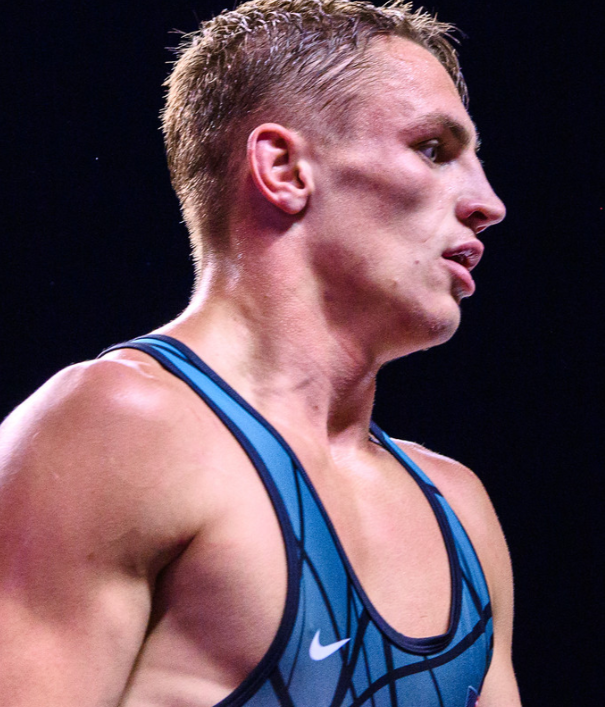
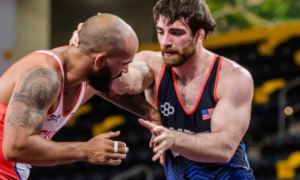
Peak, along with Rhett Peak (no relation), was a resident athlete at the Olympic and Paralympic Training Center in Colorado Springs prior to joining Hazewinkel at Position Wrestling in Oklahoma. (Photo: Tony Rotundo)
5PM: You last competed in 2018, which is not that long ago, but even prior to that you had begun gaining coaching experience and certainly much more so since then. How is presiding over this team different for you from a coaching aspect?
SH: Hmmm. It’s more personal. I’ve been here since the start of this. I’m not coming into a program that was already established and I don’t have eight other coaches with me. It is more personal in that way. I take a lot of pride in it. I want things to go right. I really want everything to happen the way that it should and to make sure the guys get what they need. But everything else has been the same. I’m kind of an even-keel guy. I expect adversity. It’s wrestling. I expect bad calls, I expect days when guys are sick and we’re going to have figure that out with me pulling the straps back up and being sore the next day because I had to fill in. It’s the same. Wrestling is the same. Wrestling is wrestling. It is going to be the same problems, the same issues. So in that aspect, it’s the same, but it does mean more to me. It means a lot to me. I’ve been pouring myself into it and watching the guys do the same. It has been fun. It has been a fun experience. I enjoy it very much watching everyone buying in. And that’s everyone including my wife and kids. All of us are all-in.
5PM: That was the next question I was going to ask you. How does this coaching situation differ for you, if it even does at all, with regards to fitting in with your family dynamic?
Sam Hazewinkel: I don’t know if the kids necessarily understand the difference but they love going up into the room and playing. I stole an idea from “Big Pharma”. I’m going to get guys injured, send them to my wife, and she will do the medical thing (laughs). It’s a genius move. We work together on that (laughs). But no, everyone is all-in. The family loves it. They’re all-in. You know, it’s a struggle. There are longer hours and it means more, so there is more emotion involved. But we’re loving it. We’re loving seeing where God is leading us and what’s happening. We’re very much enjoying it as we go. I think the biggest problem is that Josh is getting really good at soccer and I wish it were wrestling. He is good at wrestling, but soccer is more and more his sport. Sometimes, it’s like, Man, I wish I could stay in the room all day, but I have to take him to soccer now and then. And if that’s your biggest problem, things are going well.

SUBSCRIBE TO THE FIVE POINT MOVE PODCAST
iTunes | Stitcher | Spreaker | Google Play Music